
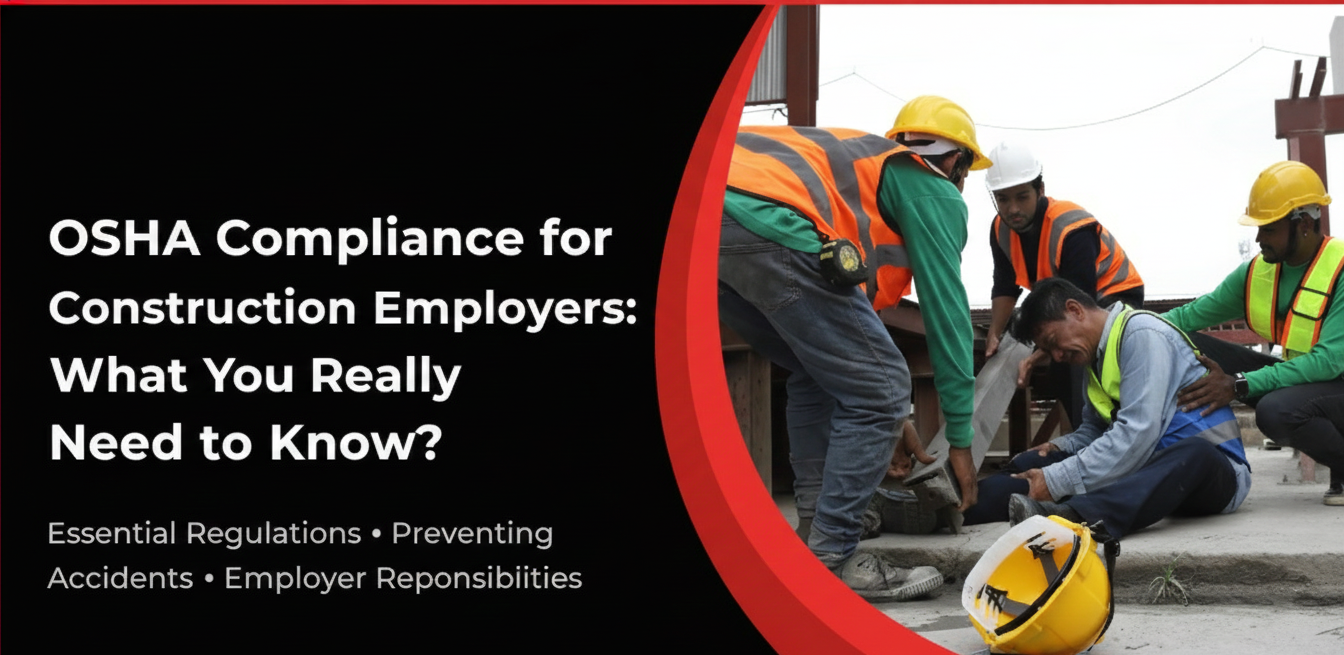
Safety is the backbone of every construction project. Employers juggle deadlines, subcontractors, and workforce demands, but nothing matters more than keeping people safe on the job. That’s where OSHA steps in. The agency sets the baseline rules that shape how construction sites operate, how workers train, and how employers protect their crews.
Companies working with a recruitment agency still carry the responsibility to maintain safe work sites. Understanding OSHA hiring compliance helps employers avoid violations, reduce risks, and build stronger teams, especially in environments where hazards change fast.
Why OSHA Compliance Matters for Construction Employers?
Construction is among the most hazardous industries. Work often involves falls, heavy machinery, electrification, dangerous materials, and shifting work zones. The federal agency Occupational Safety and Health Administration (OSHA) sets mandatory safety standards to minimize risks.
Failing to comply is not just about risking accidents; employers may face serious legal and financial consequences. OSHA can cite violations, impose fines, and even pause work on unsafe job sites.
Beyond liability, compliance signals professionalism. For companies sourcing labor through a recruitment agency, strong OSHA hiring compliance helps build trust with clients, attract skilled workers, and maintain a solid reputation.
What Are the Core Areas Covered by OSHA Standards?
OSHA standards address many hazards typical of construction sites:
- Fall hazards (scaffolding, ladders, rooftops, edges)
- Electrical safety (live wires, temporary power, ground faults)
- Hazardous materials (toxins, dust, chemicals) and proper hazard communication
- Use and maintenance of hand and power tools.
- Heavy equipment operation and safety measures (inspection, load securement, safe operation)
- Personal protective equipment (PPE): helmets, eye and ear protection, gloves, boots, respirators where required
Employer Duties: What OSHA Requires Before Work Begins?
Under the law, every employer must ensure a safe workplace. That means more than issuing a hard hat; it includes hazard assessment, OSHA training requirements, tools, signage, maintenance, and more.
1. Hazard Identification and Safety Programs
Employers should survey worksites to identify potential hazards, including falls, unstable scaffolding, electrical hazards, and hazardous materials. Then, they should develop a safety and health plan that covers prevention, hazard mitigation, and ongoing monitoring.
This is especially critical when multiple contractors or subcontractors operate on the same site. In those cases, the primary contractor (or the employer of record) retains overall responsibility to ensure compliance across all tiers.
2. Safe Tools, Equipment, and Maintenance
All tools and equipment must be safe, well-maintained, properly inspected, and used in accordance with manufacturer and OSHA guidelines. If heavy equipment or vehicles are involved, regular inspection and maintenance are essential to prevent workplace accidents and regulatory violations.
3. Provide PPE and Safety Gear
When hazards are present, employers must provide appropriate PPE. This includes hard hats, eye protection, gloves, safety boots, respirators, and hearing protection — whatever the job demands. It’s not optional.
4. Signage, Warnings, and Communication
Sites should use signs, color-coded markings, labels, or posters to alert workers to hazards. Employers must also communicate safety procedures, hazard conditions, and emergency protocols in a language and vocabulary workers understand.
5. Training Requirements
OSHA requires that workers receive proper training before starting work and whenever hazards or equipment change. The training must include hazard recognition, safe procedures, use of PPE, and understanding of relevant OSHA standards for their tasks.
For construction, specific OSHA outreach programs exist — including the popular 10-Hour and 30-Hour courses.
6. Record keeping and Site Documentation
Employers must maintain records of injuries, training, inspections, and equipment maintenance. For some types of incidents (serious injuries, hospitalization, fatalities), OSHA mandates timely reporting.
Good documentation serves two purposes: it protects workers, and it protects the employer from legal liability or fines during OSHA inspections.
How Compliance Benefits Businesses — Not Just Workers
. Legal Protection and Avoiding Penalties
OSHA can issue citations and fines for violations of standards. Some violations carry heavy penalties, especially when they involve repeated or willful neglect.
Maintaining compliance, documentation, training, and safe conditions, including the use of secure equipment and hazard communication, helps companies avoid fines and serious enforcement actions.
. Lower Insurance & Compensation Costs
When safety is managed correctly, companies see fewer accidents. That means fewer worker injuries, less downtime, lower insurance premiums, and fewer compensation claims.
. Better Recruitment, Reputation, and Retention
Employers working with a recruitment agency that enforces OSHA compliance attract better-qualified workers. Skilled tradespeople prefer employers who care about safety. That helps reduce turnover and raises the overall quality of work.
. Efficient Operations and Risk Management
A safe worksite means fewer stoppages, delays, or shutdowns. With clear safety protocols, properly maintained equipment, and trained workers, projects run smoothly and finish sooner — saving time and money.
A Better Approach!
OSHA compliance isn’t optional; it’s a foundation. By following OSHA’s construction safety standard and maintaining a robust safety program, employers protect their workers, avoid penalties, and strengthen their business reputation.
Construction employers who work with a construction recruitment agency that prioritizes compliance immediately set themselves apart. Construction Headhunters strengthens that advantage by providing fully vetted professionals who are prepared to meet safety expectations from day one. Employers looking to elevate both safety and workforce quality can connect with us today at (305) 306-4829. We offer 92% first-year retention, a 0-2 week hiring timeline, and rapid placements to keep your projects on schedule.